



Africa Health Power Initiative
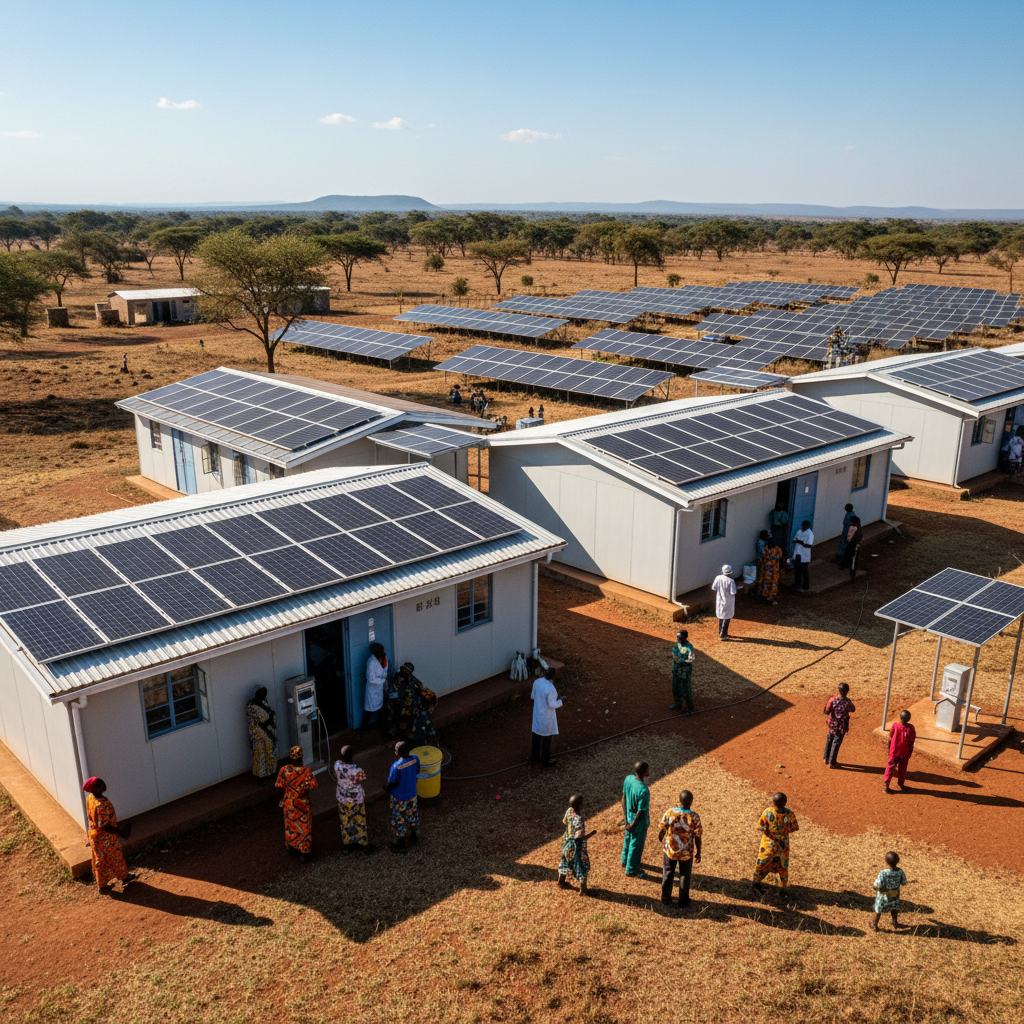
AHPI is the CSR and sustainability delivery platform of AGTPF, led by the Tanzania Red Cross Society (TRCS) in partnership with CATA Energy. AHPI deploys integrated off-grid renewable energy solutions to strengthen primary healthcare, improve water access, enable clean cooking, and build climate resilience in vulnerable African communities.
For every light we switch on — it sparks a brighter future.
Clean Energy Access
Providing clean, affordable energy to homes, schools, farms and clinics — plug-and-play solar systems that light up lives and power businesses.
Healthcare Electrification
Strengthening primary healthcare, improving maternal and neonatal care, vaccine cold chains, diagnostics, and emergency services through solar PV and battery storage.
Water & Food Security
Solar water pumps and community energy hubs addressing food security and water access, reducing dependence on diesel and biomass.
Nature-Based Solutions
Reforestation and watershed restoration embedded within deployments, reducing deforestation, restoring ecosystems, and generating long-term climate benefits.
All AGTPF investments adhere to the following internationally recognised sustainability standards:
- IFC Performance Standards on Environmental and Social Sustainability
- UN Guiding Principles on Business and Human Rights
- OECD Guidelines for Multinational Enterprises
- Equator Principles (project finance investments exceeding USD 10 million)
- ILO Core Conventions on labour standards
Key Components of the IFC Sustainability Framework
The IFC's framework (updated effective 2012) comprises three main pillars that define how environmental and social risks are governed, managed, and disclosed across all investment activities.
Policy on Environmental and Social Sustainability
Outlines the IFC's commitments and roles in sustainable development, establishing the overarching principles that guide how environmental and social risks are identified, assessed, and managed across all investment activities.
- Defines IFC's commitments to sustainable development
- Establishes roles and responsibilities across the investment lifecycle
- Sets the overarching principles for environmental and social risk governance
- Provides the foundation for client-level performance requirements
Performance Standards (PS)
Defines clients' roles and responsibilities to manage environmental and social risks. The Performance Standards cover eight key areas: Assessment and Management of Environmental and Social Risks and Sustainability Outcomes, Labor and Working Conditions, Resource Efficiency and Pollution Prevention, Community Health, Safety and Security, Land Acquisition and Involuntary Resettlement, Biodiversity Conservation, Indigenous Peoples, and Cultural Heritage.
- Assessment and management of environmental and social sustainability
- Labor and working conditions standards
- Resource efficiency and pollution prevention
- Community health, safety, land acquisition, biodiversity, indigenous peoples, and cultural heritage
Access to Information Policy
Focuses on transparency and disclosure obligations, ensuring that relevant environmental and social information is made available to affected communities and the public, supporting informed decision-making and accountability.
- Transparency and disclosure of environmental and social information
- Public availability of project-level sustainability assessments
- Stakeholder access to relevant project documentation
- Accountability mechanisms for affected communities
CSR Integration Based on IFC Standards
Using the IFC Framework as a foundation, companies — such as financial institutions — can build a robust CSR strategy across five key areas:
Sustainability of IFC-Based CSR
While the IFC Sustainability Framework is widely regarded as a benchmark, some civil society organisations have raised concerns about the implementation and enforcement of these standards in certain projects.